Discovering innovative ways to utilize the technology on our phones can transform our daily experience. One such innovation is the ability to project the mobile screen on any surface, making it a versatile tool for a variety of situations. Whether for presentations, entertainment, or even to facilitate remote work, this functionality has gained prominence. In this article, we will explore how you can project your cell phone screen onto different surfaces and the advantages that this technology can offer.
With the growing popularity of smartphones, app developers have been looking for creative ways to improve the usability of these devices. Screen Projecting Apps Mobile mirrors are a perfect example of this trend, giving users the ability to mirror their smartphone screen onto larger surfaces. This feature is especially useful for professionals who need to present information clearly and efficiently.
Furthermore, the ability to mirror cell phone on wall can be an excellent ally in home entertainment. Imagine watching movies, playing games or even sharing photos and videos from your last vacation on a big screen, without the need to buy a traditional projector. With the help of a portable cell phone projector, all this becomes possible and accessible.
However, before you start designing your cell phone screen, it is important to understand how the technology works. smartphone projection on surfaces. This article will provide you with a comprehensive guide to the best apps available, their features, and how you can maximize the use of these tools in your daily life. Read on to find out how to turn your phone into a true portable projector.
How Mobile Screen Projection Works
Screen projection, or screen mirroring, is the technology that allows your smartphone's screen to be displayed on another surface, such as a wall or projection screen. This process is done through a wireless projector for cell phone, which uses wireless connections to transmit the image from your device to the desired surface. There are several applications and devices that facilitate this process, each with their own advantages and disadvantages.
To start projecting your phone’s screen, it’s essential to have a quality app. Below, we’ve listed the five best apps available on the market to help you turn your phone into a portable projector.
Apps to Project Your Cell Phone Screen
Miracast
Miracast is one of the most popular applications for project the mobile screen. It allows you to mirror your smartphone screen to any Miracast-compatible device, including TVs and projectors. This app is easy to use and offers a stable connection, ideal for presentations and entertainment.
Additionally, Miracast supports high definition, ensuring that the projected image quality is excellent. With an intuitive interface, you can quickly set up the projection and get started. Project your mobile screen has never been as simple and efficient as with Miracast.

Google Home
Google Home is a great option for those looking for an all-in-one solution. This app lets you mirror your smartphone screen to Chromecast-compatible devices, providing a hassle-free projection experience. In addition to mirror cell phone on wall, Google Home also offers several other features for controlling smart devices in your home.
The ease of use and integration with other Google products make this app a popular choice among users. Plus, the projection quality is high, ensuring you can enjoy your movies, games, and presentations to the fullest.
ApowerMirror
ApowerMirror is a versatile app that lets you mirror your phone’s screen to PCs, Macs, and projectors. It offers a stable connection and supports high-definition projection, which is ideal for professional presentations and entertainment. ApowerMirror also has additional features like screen recording and remote control.
With a user-friendly interface, this app is easy to set up and use. It supports both wireless and wired connections, offering flexibility for different situations. Project your mobile screen with ApowerMirror it is a smooth and efficient experience.
AnyCast
AnyCast is a popular option for those who want a simple and effective projection solution. This app allows you to mirror your phone’s screen to AnyCast-compatible TVs and projectors. It offers a stable connection and supports high definition, ensuring excellent image quality.
Furthermore, AnyCast is easy to use, with an intuitive interface that makes it easy to set up your projection. This app is a great choice for those looking for a simple and quick way to project the mobile screen.
ScreenBeam
ScreenBeam is an excellent option for professionals who need a reliable solution for smartphone projection on surfaces. This application allows you to mirror your mobile screen to ScreenBeam compatible devices, offering a stable and high-quality connection.
In addition to being easy to use, ScreenBeam supports multiple resolutions, ensuring that the projected image quality is always the best possible. This application is ideal for presentations, meetings and other professional situations.
Additional Features of Projection Applications
In addition to allowing you project the mobile screen on different surfaces, many of these apps offer additional features that can further enhance your experience. Some apps, like ApowerMirror, allow you to record your phone screen while projecting, making it easy to create recorded tutorials and presentations.
Other apps offer remote control, allowing you to navigate your phone directly from the projected surface. These features make the projection experience even more practical and versatile, allowing you to maximize the use of your smartphone in different situations.
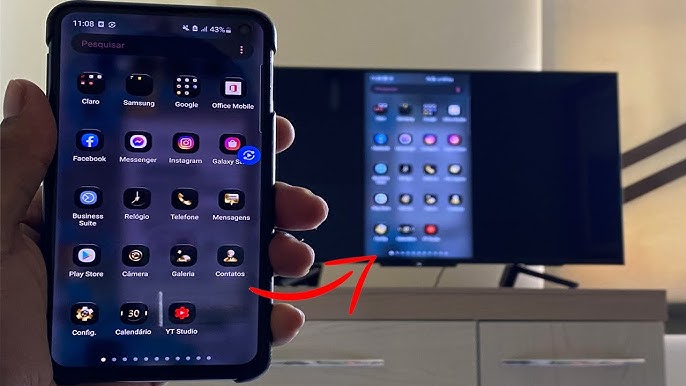
Mirroring and transmitting are different things.
The confusion between the two modes explains almost all the problems in this category. Mirror It means copying everything that's on the phone screen to another device, including notifications and the keyboard, while the phone is still working all the time. Transmit It simply sends the content's address to the device connected to the television, which then searches for the video automatically while the phone remains free.
In practice, streaming uses much less battery, doesn't freeze when a call comes in, and maintains better quality. Mirroring is the right way to show an app that doesn't have a cast button, a presentation, a game, or photos from the gallery.
And it's worth repeating what many people discover too late: without a projector or a compatible television at the other end, none of that throws an image on the wall.. The cell phone doesn't project; it sends the signal to a device that displays it.
Why does the image freeze, lag, or go black?
- Congested networkWireless mirroring relies on stable Wi-Fi, and the five gigahertz band experiences less interference.
- Devices on different networks, Devices like cell phones on the guest network and televisions on the main network prevent the connection.
- Noticeable delay A delay of a few tenths of a second is normal with wireless and can interfere with gameplay; in that case, use a cable.
- Black screen with audio Typically, this is content protection for video services, and the solution is to stream instead of mirroring.
- Battery and heatProlonged sessions overheat the device and reduce performance.
It's worth checking if your phone supports wired video output. Several models with USB-C output directly to monitors and televisions, eliminating lag and latency—but not all devices have this feature, even those with the same connector.
What comes pre-installed in the system and the most common questions.
Before installing anything, look in the Android quick settings menu for Cast, Smart View, or Screen Mirroring, depending on the manufacturer. On iPhone, the Screen Mirroring option is located in the Control Center. Video apps on both systems display the cast icon when a compatible receiver is available on the same network.
Regarding the choice of third-party applications, the rule is always the same: be wary of those that require you to install something on your computer from a website outside the app store, those that ask for accessibility permissions without explaining the reason, and those that record the screen without making it clear where the file will be saved.
Preciso de internet para espelhar?
Not necessarily. Many methods use a direct connection between devices, but both need to be on the same local network when transmission relies on Wi-Fi.
Dá para espelhar em televisão antiga?
Yes, you need a receiver connected to the television's video input. Without it, the television won't receive the signal.
Espelhar mostra minhas notificações na tela grande?
Show it. Activate Do Not Disturb mode before presenting anything in public.
Conclusion
Projecting your smartphone screen onto any surface can be a great way to improve your productivity, entertainment, and overall technology experience. With the help of the right apps, you can easily turn your smartphone into a portable projector, taking advantage of all the features of this feature. We hope this article has provided you with all the information you need to get started. project the mobile screen and make the most of this incredible technology.